
The DPRK Economic Outlook CHAPTER 1. The North Korean Economy at a Crossroads June 19, 2026
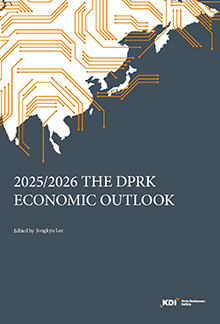
The DPRK Economic Outlook
CHAPTER 1. The North Korean Economy at a Crossroads
June 19, 2026
-
Jongkyu Lee
 프로필
프로필
Introduction
Is the North Korean economy undergoing a genuine improvement? More importantly, do the signs of recovery observed in the official sector point to a structural turning point, or are they merely temporary phenomena confined to specific sectors and periods? These questions extend beyond a straightforward assessment of recent growth rates or production indicators; they lie at the heart of determining whether the underlying structure of the North Korean economy and its mode of policy management are undergoing meaningful change.
While many observers agree that the North Korean economy is entering a phase of gradual normalization following COVID-19-era border closures and strict controls, the implications of recent changes are less clear. Easing restrictions, recovering industrial and agricultural production, renewed external exchanges, and closer ties with Russia mark a departure from the lockdown period―but they do not necessarily indicate a substantive improvement in the economy as a whole.
The divergence in assessments reflects the imbalanced nature of North Korea’s recent economic recovery. Although improvements are evident in the official sector, particularly in industrial output and state revenues, these gains have not spread to the informal sector in any meaningful way. Income growth and demand recovery therefore remain limited. At the same time, persistently high exchange rates and elevated market prices point to continued macroeconomic instability and suggest that underlying vulnerabilities remain unresolved.
This raises the question of whether the recent signs of recovery are driven by changes in policy direction or by shifts in the external environment and temporary conditions. This distinction is key to assessing whether the North Korean economy is undergoing structural change or remains in a short-term adjustment within the existing system.
First, recent improvements appear concentrated in areas directly controlled and mobilized by the state rather than broadly across the economy. As the Five-Year Plan for National Economic Development enters its later stage, resources and policy capacity have been more tightly concentrated, while production suppressed during the COVID-19 period has rebounded sharply. From this perspective, the current gains are better understood as base effects or the result of concentrated policy efforts rather than a structural shift.
By contrast, recent developments may also be interpreted as the early stage of a new growth path. Expanded North KoreaRussia cooperation points to a potential shift beyond a China-centered trade structure toward new supply chains, while recovery in the official sector may carry implications for greater stability and institutionalization in the informal sector. The partial weakening of the sanctions framework that has long constrained the economy also represents a notable change. Although still limited, these factors are not easily reducible to base effects. Accordingly, interpretations of the current phase will shape assessments of the North Korean economy’s future sustainability.
This chapter builds on these concerns and provides a multidimensional interpretation of recent signs of recovery in the North Korean economy. As noted above, the key issue is not simply whether the economy is improving, but where, how, and to what extent such improvement is occurring, and whether it is sustainable. More specifically, it examines whether recovery in the official sector can spill over into markets and the private sphere, whether it will face limits once state-led mobilization eases, and how the authorities may respond to these dynamics.
Within this framework, the chapter evaluates economic conditions over the past year and the performance of the Five-Year Plan, and considers future prospects. It first reviews the plan’s implementation and outcomes, and analyzes developments in industry, agriculture, and state revenues. It then outlines the key features of the North Korean economy in 2025 and examines the main factors shaping its trajectory in 2026. Finally, it synthesizes the structural constraints facing the economy and the range of available policy choices.
* This article is part of 2025/2026 The DPRK Economic Outlook
For more, please refer to the attached file.
- Contents
-
1. Introduction
2. Assessment of the Recent North Korean Economy
3. Key Economic Determinants in 2026
4. Conclusion
References
Security code
![captcha]()
We reject unauthorized collection of email addresses posted on our website by using email address collecting programs or other technical devices. To access the email address, please type in the characters exactly as they appear in the box below.
KDI Staff Information
Please enter the security code to prevent unauthorized information collection.
KDI Staff Information
KDI Staff Information