
SITEMAP
HOT ISSUE

2026. 9
The Korean economy continues to improve, led by sectors closely tied to AI-related investment.
자세히 보기

SPOTLIGHT



LATEST REPORT


A Study on Structural Changes in the Unemployment Rate

Evaluating the Impact of Government Policy in the Pharmaceutical Sector: Analysis and Key Implications

Income and Wealth Inequality in Korea

Structural Changes in Korea’s Retail Markets and Their Economic Impacts

Renewable Energy Deployment in Korea: Economic Drivers, Barriers, and Policy Implications

Macroeconomic Impact of AI Diffusion
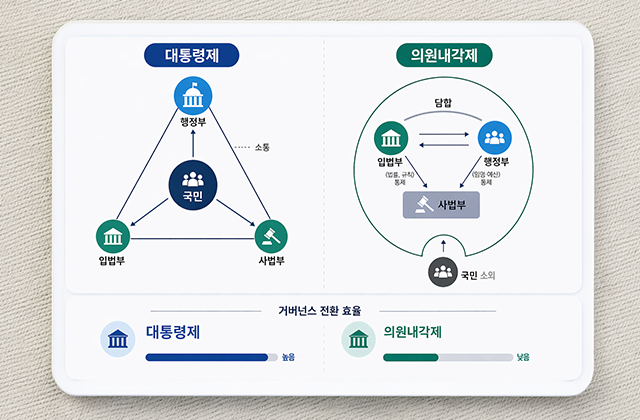
Government Forms and Economic Security

Korean Real Estate Project Finance: Structure, Problems, and Policy Recommendations

Analysis of Commuting Efficiency based on Urban Spatial Development and Transport Infrastructure Supply Policies

A Study on the Economic Impact of Foreign Worker Inflows and Determinants of Migration Decisions
EVENT

G20 Global Financial Stability Conference 2026 Impact of structural transformations, including AI innovation and supply-chain fragmentation
October 27, 2026 (Tuesday) 09:30~16:40
Grand Ballroom(3F), Four Seasons Hotel Seoul MOEF, KDI VIEW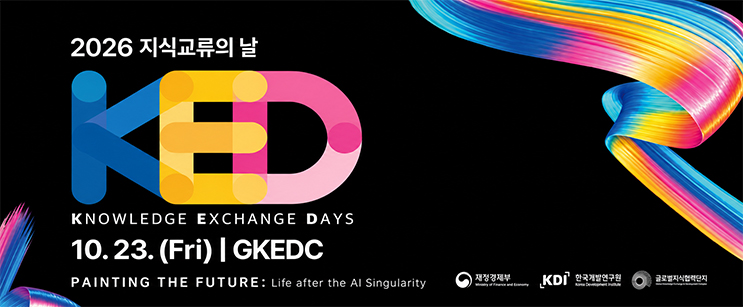
2026 Knowledge Exchange Days Painting the Future: Life After the AI Singularity
October 23, 2026(FRI), 09:20~19:30
Global Knowledge Exchange & Development Center (GKEDC) MOEF / KDI VIEW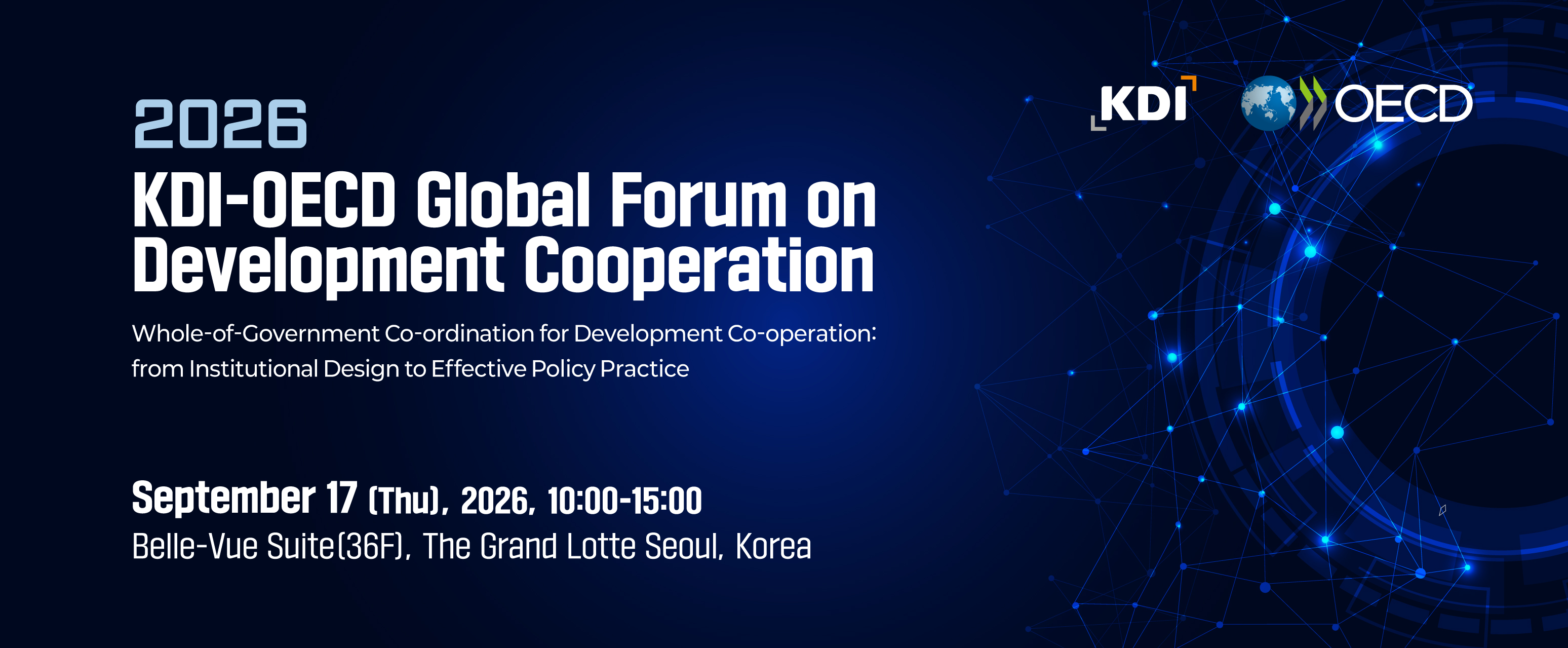
Whole-of-Government Co-ordination for Development Co-operation: from Institutional Design to Effecti 2026 KDI-OECD Global Forum on Development Cooperation
17 September (Thu), 2026, 10:00-15:00
The Grand Lotte Seoul, Korea KDI, OECD VIEW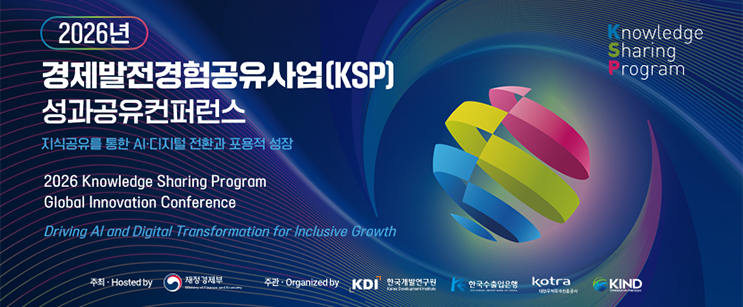
Driving AI and Digital Transformation for Inclusive Growth 2026 KSP Dissemination Conference
September 07, 2026(MON) 10:30~15:30
Vista Hall, Grand Walkerhill Seoul MOFE, KDI, KEXIM, KOTRA, KIND LIVE VIEW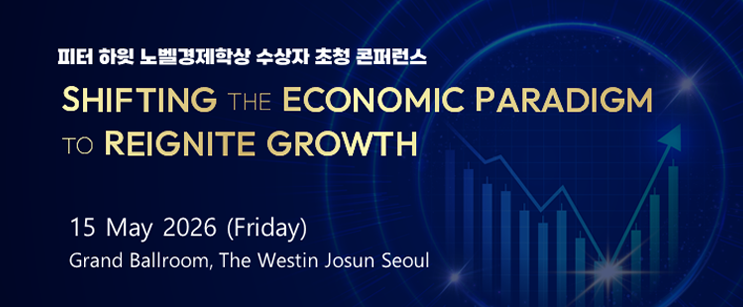
Shifting the Economic Paradigm to Reignite Growth Conference with Nobel Laureate Peter Howitt
15 May 2026 (Fri), 13:10-17:40
Grand Ballroom, The Westin Josun Seoul National Research Council Korea, Korea Development Institute VIEW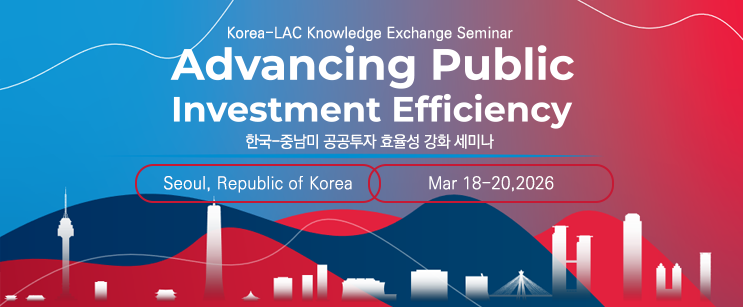
MPB-KDI-IDB PIM Seminar Advancing Public Investment Efficiency
March 18 (Wed) - 20 (Fri), 2026
Fraser Place Central Seoul, Seoul, Korea MPB, KDI, IDB VIEW
Global Carbon Market Investment Forum
December 11, 2025(THU) ~ 12(FRI)
Global Knowledge Exchange and Development Center Ministry of Economy and Finance / KDI VIEWPERIODICALS
In July, total industrial production remained unchanged, retail sales declined, and facility investment increased. In August, employment growth accelerated, while consumer price growth picked up from the previous month. In July, output declined in the services sector (down 1.3% m-o-m and up 3.5% y-o-y) and construction (down 1.1%, down 3.2%) , while output in the industrial sector increased (up 0.2%, up 3.6%), leaving overall industrial production unchanged (0.0%, up 3.1%) . The cyclical indicator of the coincident composite index for July rose by 0.8 points and the cyclical indicator of the leading composite index increased by 0.4 points. In July, retail sales decreased (-2.4% m-o-m, -0.8% y-o-y) , and facility investment moved up (+7.5%, +24.9%). The consumer sentiment index (CSI) fell by 2.3 points month-on-month to 104.5 in August. The composite business sentiment index (CBSI) went up by 1.1 points to 99.6 and the CBSI outlook for September increased by 3.1 points to 99.6. In August, exports grew by 68.7 percent year-on-year, supported by strong exports of semiconductors, computers, and cosmetics. Average daily exports rose by 72.5 percent in August compared to the same month of last year. In August, the number of employed persons grew by 184,000 year-on-year, with the unemployment rate remaining unchanged from a year earlier at 2.0%. The consumer price index (CPI) climbed by 3.1 percent year-on-year (2.8% in July → 3.1% in August), with the index excluding food and energy rising by 3.4 percent, the index excluding agricultural products and petroleum products by 3.1 percent, and the CPI for living necessities by 3.2 percent. In August, stock prices moved up, Korean Treasury Bond yields rose, and the Korean won strengthened against the U.S. dollar. In August, both housing prices (up 0.32% m-o-m) and Jeonse (lump-sum deposits with no monthly payments) prices (up 0.35% m-o-m) climbed. The Korean economy continues to show a solid recovery, supported by strong export growth and improving domestic demand, including consumption. However, uncertainties have increased somewhat amid the conflict in the Middle East, with pressures on livelihoods persisting due to high oil prices and difficult employment conditions for vulnerable groups and sectors. The global economy continues to grow at a moderate pace, but uncertainties surrounding the conflict in the Middle East and U.S. tariff measures persist. The government plans to closely manage the supply and demand of key items to minimize the impact of the Middle East conflict and ensure the smooth implementation of key measures under the Chuseok Livelihood Stabilization Plan, including efforts to stabilize prices of major holiday items. It also plans to swiftly implement a range of policy measures under the Economic Growth Strategy for the Second Half of 2026, including a post-conflict strategy, measures to boost potential growth and address economic polarization.
In many respects, 2025 can be understood as a year of transition for the North Korean economy. Rather than marking a decisive break from previous trends, the year reflected the authorities’ efforts to stabilize the gains achieved during the recovery period while simultaneously preparing the foundation for a new stage of economic development beyond the current Five-Year Plan. Although signs of improvement became increasingly visible in selected sectors of the official economy, important questions remain regarding the sustainability, scope, and structural implications of this recovery.
Understanding North Korea’s healthcare system requires looking beyond headline figures to how conditions evolve and what field evidence can reveal. Since Kim Jong Un assumed power, hospital construction and modernization have been central to rebuilding the system, with the push extending to local hospitals after 2025 was designated the inaugural year of the public health revolution. Institutional reform has moved alongside this expansion: the 2026 constitutional revision removed provisions on free medical care, while the “Health Insurance Fund” has been broadened as part of a wider restructuring of healthcare provision. Digitalization is also intended to link central and local institutions and spread medical expertise more widely. Whether these reforms endure, however, will depend on staffing, medicines, equipment, and sustainable financing. Future inter-Korean cooperation will therefore need to move beyond material assistance toward strengthening institutional and operational capacity.
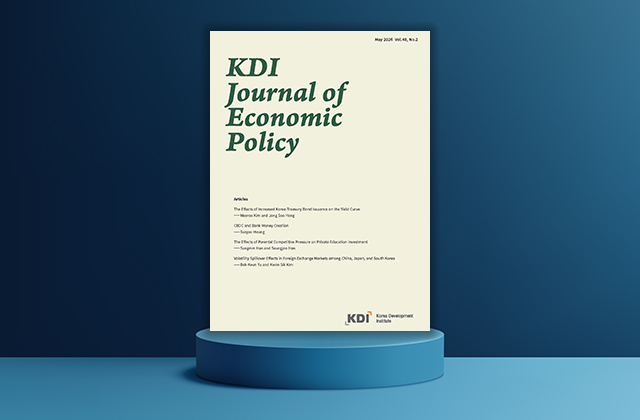
Invoicing Currency and Exchange Rate Transmission in Korea’s Export / JUNHYONG KIM Using highly disaggregated Korean micro-level trade data, this paper examines the determinants of invoicing currencies and their implications. We find that the determinants of exchange-rate passthrough ? intermediated imported inputs, market share, and foreign currency liability ? play an important role in shaping currency invoicing decisions. Invoicing choices also exhibit strong persistence over time and strategic complementarity. Demand elasticity further amplifies strategic complementarity. Moreover, exchange-rate passthrough differs markedly across invoicing currencies, with important implications for real economic allocations. The findings here are highly relevant for policymakers in small open economies that do not issue vehicle currencies yet face pervasive dominant-currency pricing. Effects of the Basic Pension Reform on Consumption and Labor Supply of the Elderly / MINSOO CHO AND HYELIM SON This study examines the effects of South Korea’s Basic Pension reform on the consumption and labor supply of the elderly. Using data from the Korea Welfare Panel Study (KoWePS) spanning the years 2009 to 2018, and by applying the difference-in-differences methodology, we find that the increase in pension benefits has had a small positive effect on household consumption but no significant impact on overall employment. However, we observe a decline in full-time employment and total work hours among the elderly. Additionally, a triple-difference analysis shows that the labor supply reduction is concentrated among low-educated elderly women, highlighting important heterogeneity in policy responses to the pension reform. An Analysis on Adequacy of Effective Reserve Requirement Ratio in Korea / JONG CHIL SON AND JOONYOUNG HUR This study examines the adequacy of Korea’s effective reserve requirement ratio (defined as the ratio of banks’ Korean-won deposits held at the liability accounts of the Bank of Korea to their Korean-won deposits) and its potential use as a macroprudential policy tool, employing cointegration regression analysis and a Bayesian VAR conditional forecasting framework. The main findings are as follows. First, the effective reserve requirement ratio in Korea is found to exhibit a generally positive long-run equilibrium relationship with economic growth and the financial stress index. Second, projections of the ratio through 2045 based on the estimated cointegration coefficients indicate a gradual decline under the baseline scenario. Third, conditional forecasts for the next ten years using a Bayesian VAR show that maintaining the current level of 4.2% minimizes the sum of squared forecast errors, compared with scenarios in which the ratio increases or decreases by 1.5 percentage points. Fourth, Korea’s reserve requirement system appears to have contributed to macroprudential stability by functioning as an automatic stabilizer that mitigates short-term liquidity fluctuations in the money market. In conclusion, the current level of the effective reserve requirement ratio does not deviate significantly from its equilibrium path and is expected to decline gradually in response to changing macro-financial conditions, including a slowdown in economic growth. The Impact of Financial Stability Policies on Korea Treasury Bond Yields / JONG SOO HONG AND MEEROO KIM This paper examines the effects of macroprudential regulations implemented in the Republic of Korea on Korea Treasury bond (KTB) yields. While macroprudential regulations primarily aim to enhance financial stability by mitigating systemic risks, they can also indirectly affect bond market dynamics by altering the demand for safe assets. Specifically, this study analyzes the impacts of two significant financial stability measures introduced in the Republic of Korea following the Global Financial Crisis: restrictions on securities firms' call borrowing and the phased implementation of the liquidity coverage ratio (LCR) for banks. Empirical findings indicate that restricting securities firms' call borrowing to within 25% of their equity capital and subsequently excluding them from the call market substantially increased their demand for KTBs, cumulatively reducing KTB yields by approximately 10.8 to 12.5 basis points. Furthermore, the phased implementation of the LCR regulation increased banks’ demand for KTBs, resulting in an additional cumulative decrease in KTB yields of approximately 6.1 to 7.3 basis points. These findings underscore the necessity for policymakers to carefully consider the potential implications for bond markets and broader financial market spillover when introducing or adjusting macroprudential measures.

| ■ | The Korean economy continues to improve, led by sectors closely tied to AI-related investment. | |
| ○ | Exports and equipment investment continue to post strong growth amid expanding AI infrastructure investment at home and abroad, while manufacturing production continues to expand in related industries. | |
| - | Exports and equipment investment continued to grow strongly, led by semiconductors, while production was relatively solid in AI investment-related industries such as fabricated metal products, electrical equipment, and machinery and equipment. | |
| ○ | Nevertheless, consumption is improving only gradually, as the broader economic improvement has yet to feed through fully to household incomes more broadly. | |
| - | Services production growth has also moderated from its previously high pace, particularly in wholesale and retail trade and accommodation and food services, which are closely linked to consumption. | |
| ○ | Meanwhile, uncertainty remains elevated amid geopolitical instability in the Middle East and U.S. trade policy. | |
SNS







Korea Development Institute


NEWS
-
KDI News
2026 KDI-OECD Global Forum on Development Cooperation
Sep 17, 2026 -
KDI News
AfDB President Visits GKEDC
Sep 08, 2026 -
KDI News
KDI-OECD DEV Joint Seminar on Climate Transition, Resilience and Development Cooperation
Sep 16, 2026 -
KDI News
2026 Knowledge Sharing Program (KSP) Global Innovation Conference Successfully Concludes
Sep 18, 2026 -
KDI News
Policy Forum on “Key Strategies for Genuine Growth in the AI Era”
Sep 02, 2026
World's Leading Think Tank, Korea Development Institute.