
The DPRK Economic Outlook CHAPTER 4. Assessment of North Korea’s Industrial Sector in 2025 and Outlook for 2026 June 19, 2026
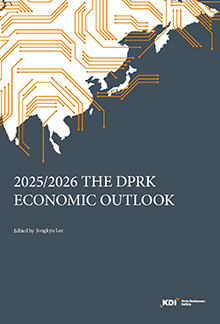
The DPRK Economic Outlook
CHAPTER 4. Assessment of North Korea’s Industrial Sector in 2025 and Outlook for 2026
June 19, 2026
Introduction
Assessing North Korea’s industrial performance is inherently constrained by a severe lack of reliable quantitative data. Unlike external trade and prices, where analysis can draw on Chinese customs statistics and market price information from specialized media on North Korea, the industrial sector offers few measurable indicators. Its evaluation therefore requires a comprehensive assessment based on qualitative evidence, including official statements by North Korean authorities, reporting trends in Rodong Sinmun, and broader domestic and external factors such as sanctions. In particular, year-end plenary meetings of the Workers’ Party and the Supreme People’s Assembly, as well as Cabinet plenary meetings held in the early part of the following year, together with coverage in Rodong Sinmun of industrial and enterprise developments throughout the year, have traditionally served as key reference points for assessing annual industrial performance.
In 2025, both the availability and analytical value of such information declined markedly. Despite being the final year of the Five-Year Plan for National Economic Development, official assessments remained limited. The year-end Party plenary meeting offered only broad, generalized evaluations, and as of mid-January 2026, the cabinet plenary meeting had yet to be convened. Media reporting was largely confined to general claims of fulfilling the annual people’s economy plan and brief references to sectoral and enterprise-level outcomes. Notably, the 12 Major Goals of the people’s economy, previously highlighted as key performance indicators since 2023, were not mentioned at all. This marks a clear departure from 2023 and 2024, when both these targets and overall industrial trends were reported in greater detail.
While official statements by North Korean authorities cannot be fully taken at face value, they nonetheless remain a key reference for assessing the economy. In 2025, given the limited official assessments by the authorities and the lack of detailed reporting on specific trends in Rodong Sinmun, it is difficult to evaluate performance in the industrial and real sectors.
Accordingly, this chapter evaluates industrial outcomes indirectly by examining the direction and magnitude of the effects of economic policies, including the implementation of the Five-Year Plan, as well as broader domestic and external factors such as trade conditions. The assessment is therefore necessarily provisional and subject to revision as more concrete information becomes available, particularly through 9th Party Congresses or related official disclosures.
* This article is part of 2025/2026 The DPRK Economic Outlook
For more, please refer to the attached file.
- Contents
-
1. Introduction
2. Assessment of Domestic and External Factors
3. Industrial Trends
4. Assessment and Outlook
References
Security code
![captcha]()
We reject unauthorized collection of email addresses posted on our website by using email address collecting programs or other technical devices. To access the email address, please type in the characters exactly as they appear in the box below.
KDI Staff Information
Please enter the security code to prevent unauthorized information collection.
KDI Staff Information
KDI Staff Information