
KDI JEP CBDC and Bank Money Creation May 31, 2026
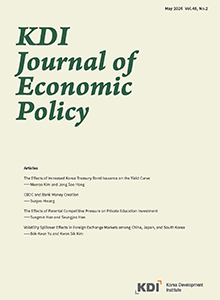
May 31, 2026
-
Sunjoo Hwang
 프로필
프로필
This paper examines the impact of a retail type of Central Bank Digital Currency (CBDC) on bank lending. While concerns exist that CBDC could reduce bank lending by diverting deposits from commercial banks to the central bank, this paper argues that the relationship between CBDC and bank lending is more complex because real-life banks do not lend out of deposits but instead create deposits by making loans. By examining a model of “fountain pen money” creation, the paper shows that a bank's lending capacity is influenced by both cash deposits and an augmentation factor. While CBDC reduces the capacity for lending as some deposits shift to the central bank, the magnitude of this reduction depends on the size of the augmentation factor and may not lead to a significant decrease in bank lending. In economies where banks lend close to their deposit base, such as in South Korea, the reduction in lending due to CBDC is likely to be marginal. Furthermore, this paper explores the social welfare implications of the contractionary effect of CBDC, showing that if the money creation constraint is weakly binding, CBDC can improve social welfare by mitigating excessive lending. Conversely, if the money creation constraint is strongly binding, CBDC may reduce social welfare by exacerbating credit shortages.
- Contents
-
CBDC and Bank Money Creation
I. Introduction
II. Theoretic Analysis
III. Discussion
IV. Wholesale Funding
V. Pass-Through Lending
VI. Concluding Remarks
REFERENCES
We reject unauthorized collection of email addresses posted on our website by using email address collecting programs or other technical devices. To access the email address, please type in the characters exactly as they appear in the box below.
Please enter the security code to prevent unauthorized information collection.