
News KDI GKEDC hosts 「K-POP as a Global Cultural Industry」
KDI GKEDC hosts 「K-POP as a Global Cultural Industry」
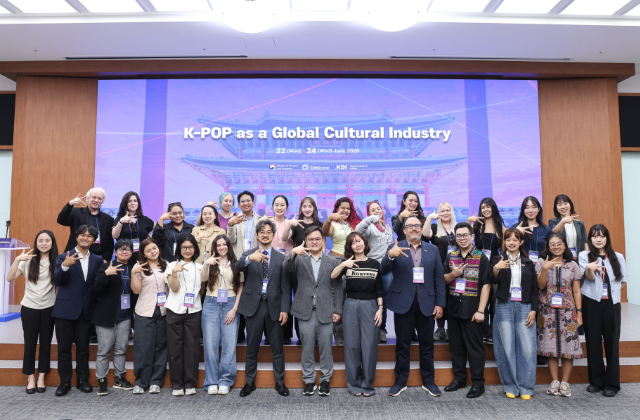
The KDI Global Knowledge Exchange and Development Center (GKEDC) successfully organized the program “K-POP as a Global Cultural Industry” from June 22nd (Mon) to 24th (Wed), 2026, to share strategies behind the global growth of the K-POP industry.
The program was designed to present K-POP not merely as a music genre but as a global cultural industry integrating policy, artist branding, intellectual property (IP), fandom, and digital platforms. Participants learned about the development of South Korea’s cultural industry policies, K-POP’s strategies for entering global markets, and its expansion into diverse industries, while gaining a comprehensive understanding of the collaborative structure among government, industry, and academia that underpins this growth.
The program brought together 21 participants selected from government ministries and the cultural industry, media, and education sectors across various countries, joined by keynote speaker Professor Ray Seol of Berklee College of Music. Alongside lectures and Q&A sessions, a range of field-oriented programs was offered, including institutional visits, K-POP vocal and dance experiences, and observation of K-POP merchandise outlets and pop-up stores.
[June 22, 2026 (Mon) | Global Impact of the K-POP Industry, Global Business Models, and Government Policy Support]
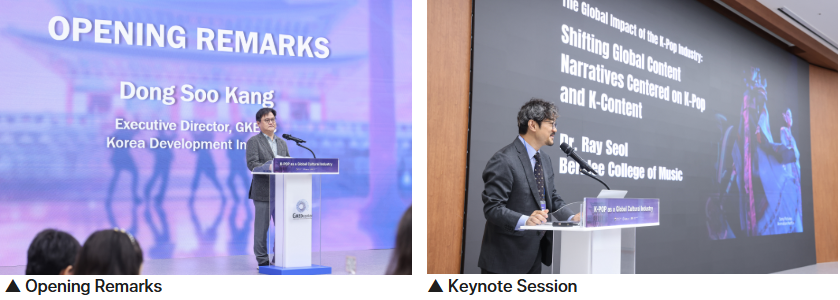
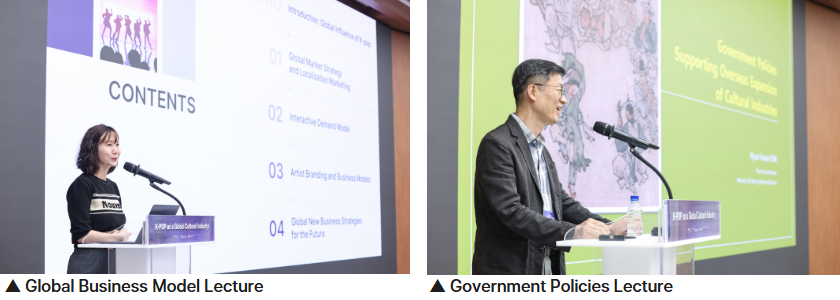
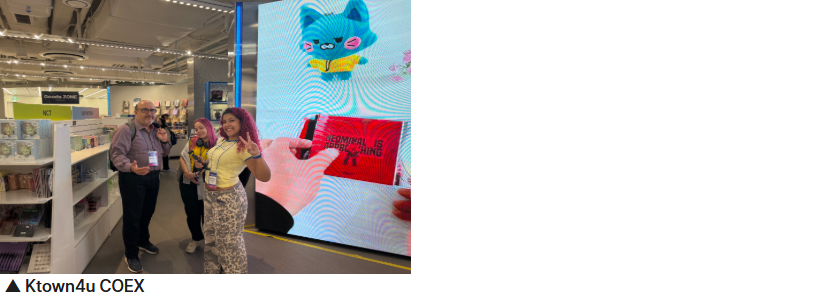
On the first day, keynote addresses and lectures examined the global impact of the K-POP industry, K-POP’s global business models, and government policies supporting the overseas expansion of the cultural industry. The day also featured an institutional visit, a lecture, and a K-POP dance experience program centered on the K-POP training system.
In his keynote address, Professor Ray Seol of Berklee College of Music introduced the evolving global content discourse centered on K-POP and K-content, and shared the background of K-POP’s growth from a music genre into a worldwide cultural industry. Ms. Sunmi Yun, Visiting Specialist at KDI GKEDC, explained strategies tailored to global markets and localized marketing, fandom-driven demand creation models, artist branding and IP business, and future strategies. Professor Hyunhwan Kim, former Vice Minister of Culture, Sports and Tourism, introduced the evolution of Korean cultural industry policies and cases of support for K-culture’s entry into global markets to shape the growth of the Korean Wave (Hallyu).
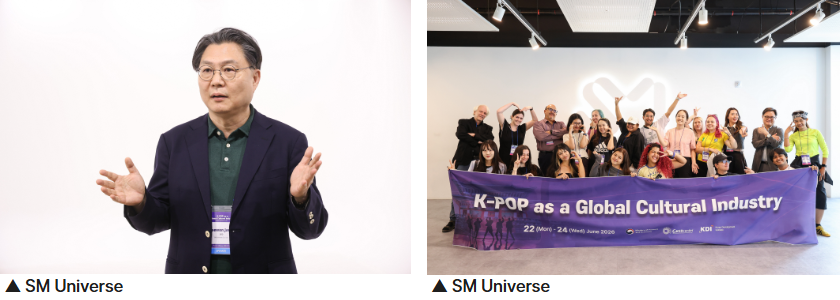
In the afternoon, participants visited SM Universe to observe and learn about the operational structure of a specialized K-POP education institution and its global education initiatives. Through a site tour led by Mr. Jaewon Jang, CEO, and a lecture by Ms. Haein Rachel Park, CTO, the participants gained an understanding of the history of the K-POP industry, as well as artist development, casting, trainee evaluation, and customized training systems. Participants then took part in a K-POP dance class featuring aespa’s ‘LEMONADE,’ experiencing key choreography and performance firsthand. Finally, they visited the Ktown4u COEX branch to view albums, official merchandise, pop-up stores, and cafe-style fan spaces, observing how K-POP IP extends into offline distribution and experiential fan marketing.
[June 23, 2026 (Tue) | IP Business through K-POP Collaboration and the Operations of Global Entertainment Agencies]
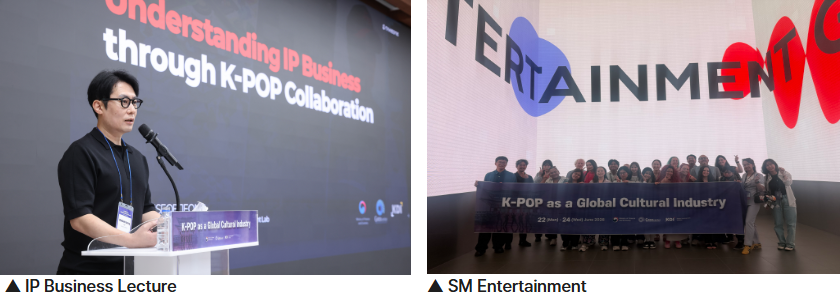

On the second day, a lecture explored IP business developed through K-POP collaboration, while an institutional visit examined the operations of a global entertainment agency and its fan engagement and experiential marketing.
Mr. MinSeob Jeong, Director of Take One Company, introduced cases of game and digital content planning that leverage K-POP artists’ characters, music, worldviews, and fandom elements. Drawing on major projects such as BTS WORLD and BLACKPINK THE GAME, he shared business models and global market strategies for extending artist IP into games, digital photocards, merchandise, pop-up stores, and short-form platforms.
In the afternoon, participants visited SM Entertainment to tour the company’s key business areas and spaces, observing the actual operations of K-POP content production, global artist management, and fandom business. They then browsed albums and various merchandise at the KWANGYA@SEOUL store, freely observing the distribution methods for official products. Participants also joined a guided tour of Deoksugung Palace, which has served as the backdrop for many K-Contents, as part of a cultural experience program.
[June 24, 2026 (Wed) | K-POP Vocal Training Experience and Wrap-up Seminar]
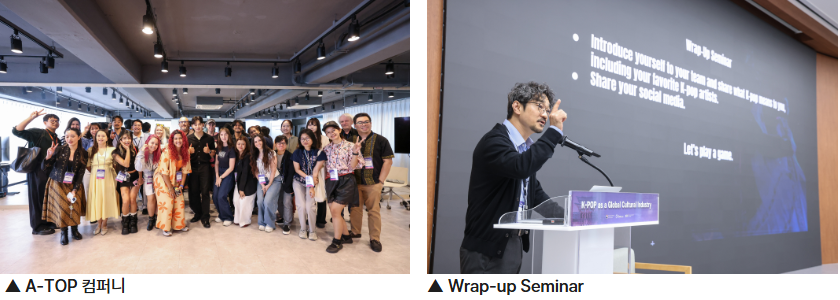
On the final day, a site visit addressed the characteristics of K-POP vocal training systems through a hands-on experience, while the wrap-up seminar concluded the program with a comprehensive review of the training content and the preparation of individual action plans.
Mr. Jinyoung Jang, CEO of A-TOP Company, introduced recent musical trends in K-POP and the vocal characteristics of different agencies, and led a hands-on vocal class in which participants could experience vocalization techniques firsthand. In the ensuing Q&A session, he shared field experience regarding vocal training and artist development.
In the afternoon, the wrap-up seminar was held with Professor Ray Seol as moderator. Using Kahoot, a real-time interactive quiz platform, participants revisited the key content of the training in a game format, and then, through group discussions and presentations, explored ways to apply K-POP industry policy, global expansion, IP commercialization, and fandom strategies to their own countries’ cultural content industries.
Finally, participants prepared action plans, organizing feasible tasks based on their respective cultural assets and industrial environments, and shared policy, institutional, and business implications for the future development of their cultural industries. In doing so, they reached a shared understanding that, rather than simply imitating the outward form of K-POP, each country should secure global competitiveness on the foundation of its own unique culture and identity.
Written by Hyunjung Ahn, Researcher, International Cooperation Team II, KDI GKEDC, hyunjung_ahn@kdi.re.kr
We reject unauthorized collection of email addresses posted on our website by using email address collecting programs or other technical devices. To access the email address, please type in the characters exactly as they appear in the box below.
Please enter the security code to prevent unauthorized information collection.