
정책연구시리즈 에너지 산업 육성을 위한 시장 설계 2025.12.31
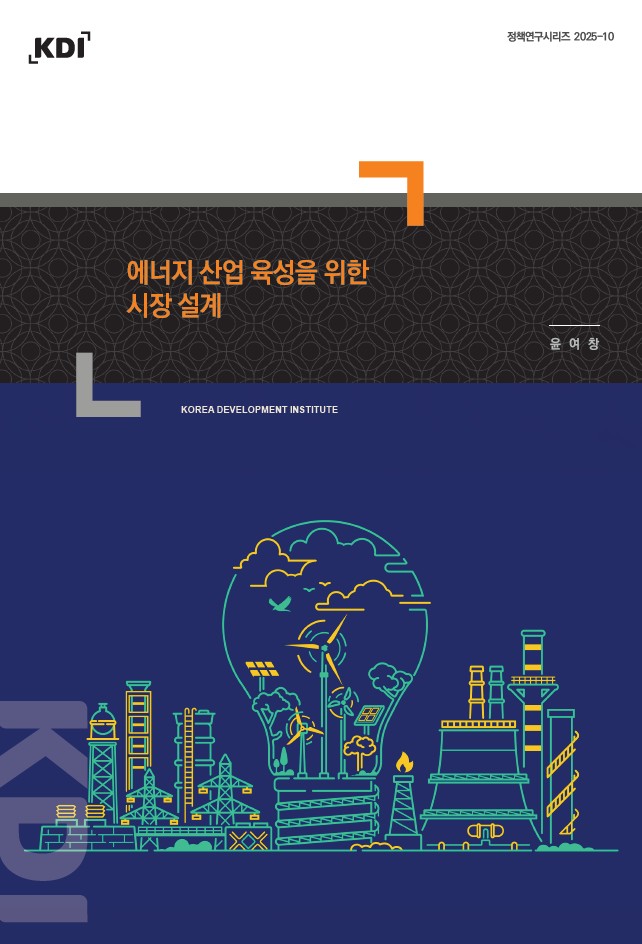
Series No. 2025-10
-
윤여창 연구위원
 프로필
프로필
- 국문요약
-
오늘날 기후위기 대응과 탄소중립 달성에 대한 필요성이 커지는 상황에서, 재생에너지와 저탄소 공정 확산을 위한 지원이 확대되고 있다. 동시에 신성장 동력 확보와 보호무역 강화로 인한 국내 산업 육성 요구도 늘어나고 있다. 하지만 산업 육성 정책은 가격 신호 왜곡과 자원배분 비효율, 통상 리스크를 초래할 수 있다는 우려도 함께 커지고 있다. 본 연구는 이런 문제의식에 기반해, 국내 에너지 산업 육성 정책과 에너지 시장 설계의 상호작용이 기업의 시장 참여와 효율성에 미치는 영향을 분석한다.
이를 위해 국내외 기업 간 비용과 경쟁력 격차를 전제로 비대칭 경매 모형을 구축한다. 그리고 인프라 구축과 제도 개선 등 시장 진입 비용을 낮추는 수평적 지원정책과 함께, 국내 기업이 낙찰될 때 조건부 보조금을 제공하는 방식과 비가격 가점을 부여함으로써 시장과 연계하는 수직적 지원정책을 비교하여 분석한다. 균형 분석을 수행한 결과, 진입 비용이 존재하는 상황에서는 조건부 보조금이 시장 연계 방식보다 시장 참여를 덜 위축시켜서 자원배분 효율을 높일 가능성이 큰 것으로 나타났다. 또한 수평적 지원과 수직적 지원의 정책 조합은 국산 제품 사용 비중 목표를 달성하면서도 시장 왜곡을 줄이고 경쟁을 확대하는 데 유리한 것으로 나타났다.
이러한 결과를 바탕으로 본 연구는 정책 목표를 구체화하고, 지원 대상과 수준을 설정하는 방향을 제시한다. 또한 비가격 배점을 포함한 시장 연계 방식의 설계, 통상 규범과의 정합성, 평가체계 등 핵심 정책 설계 원칙을 도출한다.
- 영문요약
-
As governments accelerate the push toward carbon neutrality―while advancing strategies for emerging industries, responding to tighter protectionism, and adapting to shifting supply chains―pressures to build domestic industrial capacity, strengthen energy security, and secure technological autonomy have intensified. Although support for renewables and low-carbon processes is expanding, preferential measures for domestic producers risk distorting price signals, weakening allocative efficiency, and increasing exposure to trade disputes. This report examines how such industrial support interacts with energy-market design and assesses the implications for market participation, competitive dynamics, and overall efficiency.
We develop an asymmetric auction model that reflects cost and capability gaps between domestic and foreign firms and incorporates a lower-bound constraint on domestic firms’ ex-ante winning probability. Within this setting, we compare three instruments: (i) horizontal measures that reduce entry costs (e.g., grid and other infrastructure investment, market and regulatory reform); (ii) conditional, flat subsidies paid when a domestic bidder wins; and (iii) market-based, multi-dimensional (scoring) auctions that award non-price premiums for domestic content. When entry costs are significant, conditional subsidies tend to dampen participation less than scoring-based linkage and can deliver higher allocative efficiency. Combining horizontal and vertical tools helps meet domestic-content objectives while limiting distortions and widening competition relative to reliance on vertical measures alone.
Building on these results, the report recommends: defining measurable short- and long-term objectives; prioritising sectors with meaningful yet bridgeable capability gaps; translating non-price scores into “equivalent subsidies” for transparent calibration; embedding regular evaluation and sunset provisions; and continuously ensuring consistency with international trade disciplines.
- 목차
-
발간사
요 약
제1장 서 론
제2장 산업 육성을 위한 지원정책의 현황과 변화
제1절 산업 지원정책의 정의와 목적
제2절 지원정책의 적용 방식과 사례
제3절 에너지 산업 지원정책에 대한 평가
제4절 한국의 에너지 산업 육성 정책
제3장 모형 분석
제1절 관련 연구
제2절 모형
제3절 균형 분석
제4장 정책적 시사점
제1절 정책 목표
제2절 지원 대상 선정과 지원 수준 설정
제3절 지원 방식 및 정책
제4절 국제 무역규범과의 정합성
제5절 평가체계 마련 및 수정 가능성
제5장 결 론
참고문헌
부 록
ABSTRACT
더 자세히 알고 싶으면?
동일 주제 자료 ( 9 )
- 주요 관련자료

한국개발연구원의 본 저작물은 “공공누리 제3유형 : 출처표시 + 변경금지” 조건에 따라 이용할 수 있습니다. 저작권정책 참조
보안문자 확인
무단등록 및 수집 방지를 위해 아래 보안문자를 입력해 주세요.
KDI 직원 정보 확인
KDI 직원 정보 확인
담당자 정보를 확인해 주세요. 044-550-5454
등록완료
소중한 의견 감사드립니다.
등록실패
잠시 후 다시 시도해주세요.